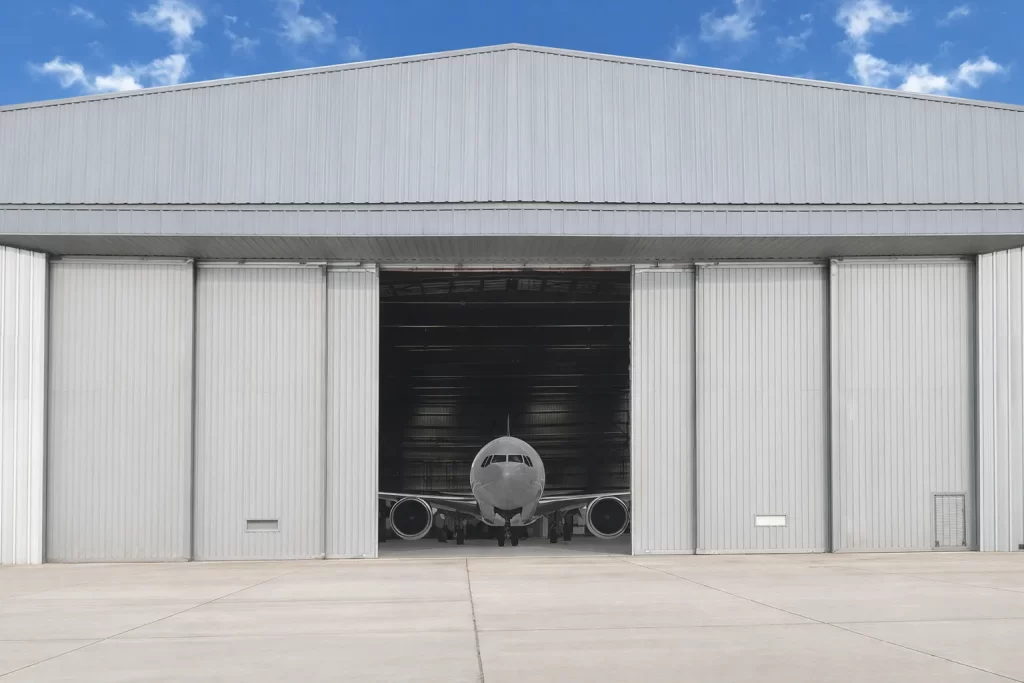
The door system in the image is a bottom rolling sliding aircraft hangar door. These systems are designed to accommodate large openings and transfer the door’s weight to the ground via heavy-duty bottom wheels and tracks, rather than the building’s top structure.
Key Components & Materials
- Door Panels: The main structure consists of steel or aluminum framing. The external face is often clad with precoated corrugated galvalume steel sheets or sometimes high-grade, durable PVC fabric. These materials are selected for durability, corrosion resistance, and ability to withstand high wind loads and extreme weather.
- Bottom Rolling Mechanism: The weight is supported by heavy-duty, double-flanged steeltrack wheels that run along a rail track embedded in the ground slab. A brush seal along the bottom pushes debris away from the rail tracks during operation.
- Top Guiding System: The top of the door panel is fitted with a guiding system that uses rollers running within an enclosed top track to provide stability and prevent the door from inclining, but it does not carry the door’s weight.
- Motor Arrangement: Motor operators are used for automated movement. These can be in-frame or surface-mounted and drive the door panels along the track. For very large doors, multiple motors may be used and housed in a control cabinet.
- Sealing: The system uses various seals, including cellular rubber and brush seals, along the bottom, sides, and horizontal intermediate beams to ensure weather-tightness and insulation.
Manufacturing and Installation Process
- Manufacturing: Hangar doors are highly customized and manufactured from standardized components based on specific site requirements, including size, wind load criteria, and desired insulation.
- Installation: Installation involves fixing pre-manufactured frames and track systems on-site. The bottom rails are installed first and grouted in place. Top guide tracks are attached to the building header. The door panels are then positioned onto the bottom rails and guided into the top tracks. The process uses equipment like cranes and manlifts. The motor and control systems are pre-wired for a “plug-and-play” setup.
- Safety Features: Electrical control equipment includes features like emergency stop buttons, audible and visual alarms, photo-electric cells, and anti-collision sensors to ensure safe operation.